Running a Quran school with software: what changes?
4 minute read
A Quran school is not an ordinary institution. Its mission is teaching the Book of Allah, and those who run it give their effort seeking reward before anything else. But as the number of students, classes and teachers grows, administrative burdens appear that take from the teachers' and management's time what would better go to the teaching itself.
This article looks calmly at what management software can add to a Quran school, and at what it should not change.
Where management usually struggles
As a school grows, its information spreads across many places:
- Teachers' notebooks, each teacher with their own way of recording memorisation and revision.
- Paper attendance sheets that are collected at the end of the month, or not at all.
- Spreadsheets or a ledger for fees, with arrears nobody follows up regularly.
- Parents asking again and again: how far has my son got? Did he attend today?
The result is that management has no clear picture of each student's level, or of each class and each branch.
A recitation log down to the verse
The heart of a Quran school is memorisation itself. Good software does not stop at recording "memorised a page" or "recited a surah"; it lets the teacher record the daily recitation and the mistakes at the level of the verse, based on the complete text of the Mushaf. This means:
- The teacher sees each student's weak points: which verses keep producing mistakes, and what kind of mistakes.
- Management can compare new memorisation with revision, so a student does not move ahead at the expense of what came before.
- Tests and promotion from one level to the next rest on a clear record, not on memory.
What matters is that the software does not become a burden on the teacher: recording must be quick, and it can be followed from a phone.
Curriculum, tests and promotion
Each level in the school has its own curriculum and memorisation plan. The software keeps that plan and links it to classes and students, so every teacher knows what is expected of their class. At test time you can prepare a question bank and test forms, record marks for memorisation, tajweed rules and recitation, and then decide clearly whether the student is promoted or repeats the level. Moving from one level to the next becomes a decision based on a written record that teacher and management see together, and it reassures parents that their child is assessed fairly and consistently.
Attendance and keeping parents informed
Following attendance is not just a number on a sheet; repeated absence is often the first sign that a student needs attention. With software:
- The class's daily attendance is recorded with a status and a note for each student.
- An SMS reaches the parent when their child is absent, so they do not wait until the end of the month to find out.
- Through the app, parents can follow attendance, recitation and invoices themselves, which cuts down the repeated questions to the office.
- Fingerprint devices can be connected to record staff attendance.
Fees and accounts
Money in a Quran school is a trust, and keeping it clear protects the trust between management, parents and donors. Software helps with:
- Issuing fee invoices and following up arrears.
- Applying sibling and orphan discounts consistently, instead of deciding case by case.
- Recording everything that enters and leaves the cash box with clear accounting entries, with a balance sheet and an income statement.
- Managing teachers and staff, payroll periods, test bonuses and monthly student prizes.
Multiple branches
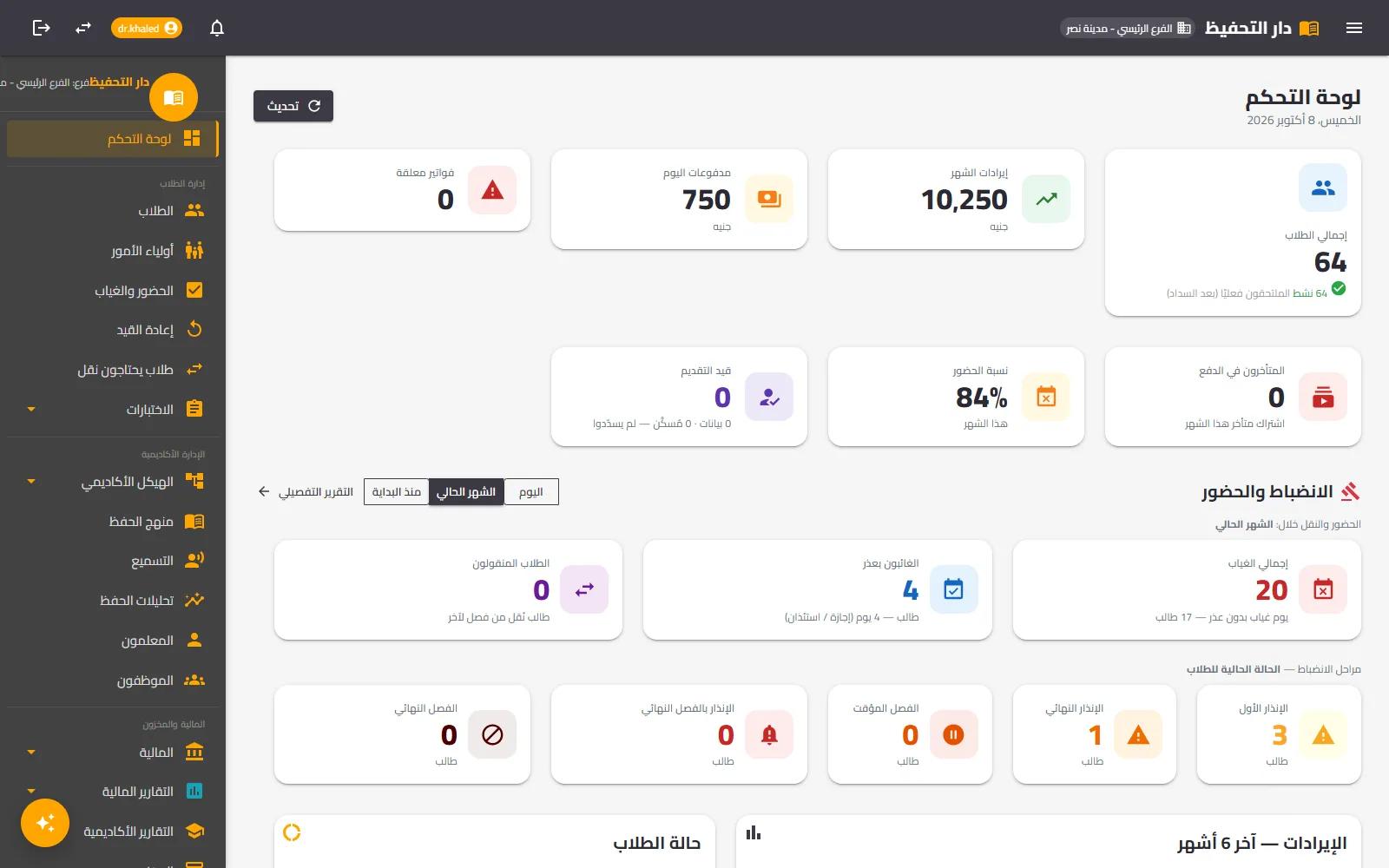
When a school has more than one branch, central management needs to see the whole picture while each branch works independently. Suitable software keeps each branch's data separate, gives every user only the permissions they need, and brings together for management one dashboard with student numbers, attendance rates and revenue for each branch. Classes can be assigned to teachers and days of the week, and a whole class can be promoted to the next level in one step.
What the software does not change
Software does not replace the teacher, nor the sitting in front of him, nor guidance and upbringing. Its role is to lift the burden of paperwork and accounts from teachers and management, so that time and effort remain for what matters more.
The bottom line
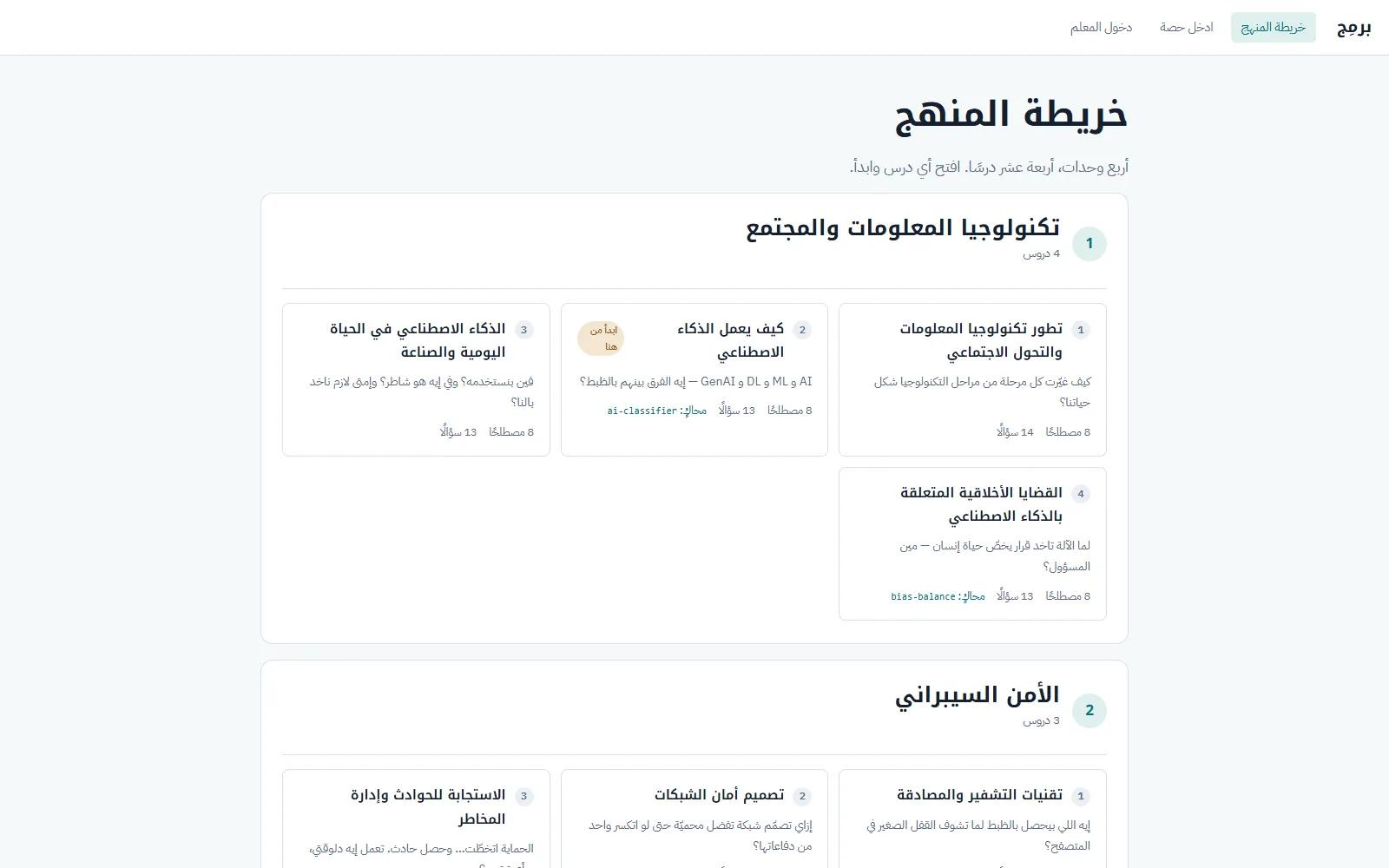
Dar Tahfeez was designed for exactly this: from admission and registration to graduation, with a verse-level recitation log, attendance and parent alerts, fees, accounting and staff, for all branches from one system. And if your organisation also runs a secondary school that teaches the programming and AI curriculum, the Barmij platform may be useful to you. Take a look at the system's page below, or message me on WhatsApp so we can talk about how your school works and what you actually need.